The first time you notice it, it looks like a nervous habit.
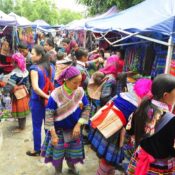
An older Hmong woman is walking to the market, and her hands are busy the whole way, pulling a strand of pale fibre from a bundle at her hip, twisting, joining, twisting again, feeding the finished thread into a basket. She is not fidgeting. She is spinning, and she has been doing it since she was a girl, in the gaps of the day when her hands are otherwise free.
That thread will become cloth. The cloth will become a skirt. And from the day the seed went into the ground to the day the skirt is finished, close to a year may have passed.
It starts with a field
In roughly March, hemp is sown, cây lanh, the fibre plant at the centre of Hmong textile life. It is planted densely on purpose, which forces the stalks to grow tall and straight and keeps the fibre long and fine.
About three months later it is cut and left in the sun to dry. Then the stalks are split and the outer fibre is stripped away by hand in long ribbons and tied into bundles.
At this stage it is nothing like fabric. It is stiff, coarse and full of woody bits. What comes next is the part outsiders never picture.
Softening, spinning, boiling
The dried fibre is pounded to break it down, traditionally rolled under a heavy stone or beaten in a wooden mortar until it turns soft and pliable and starts to look like hair.
Then it is joined. Not spun on a wheel from raw fluff, but joined end to end, fibre to fibre, by hand, which is the walking-to-market work. It is later twisted more evenly on a simple spindle or wheel.
The yarn is then boiled in water mixed with wood ash. The lye strips out the last of the gum and colour, and the fibre comes out noticeably paler and softer. It is washed in the stream, dried, boiled again. Some households repeat it several times, because every round makes the finished cloth whiter and smoother.
Only now is there thread worth weaving.
The loom
Weaving is done at home on a wooden loom, often a narrow one, which is why traditional cloth comes in strips that are later sewn together rather than in wide bolts.
The cloth that comes off it is a soft, uneven, slightly stiff ivory. It has a texture no machine bothers to reproduce, because unevenness is exactly what a mill is built to eliminate.

Indigo, and wax
Then it goes blue.
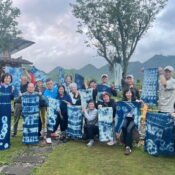
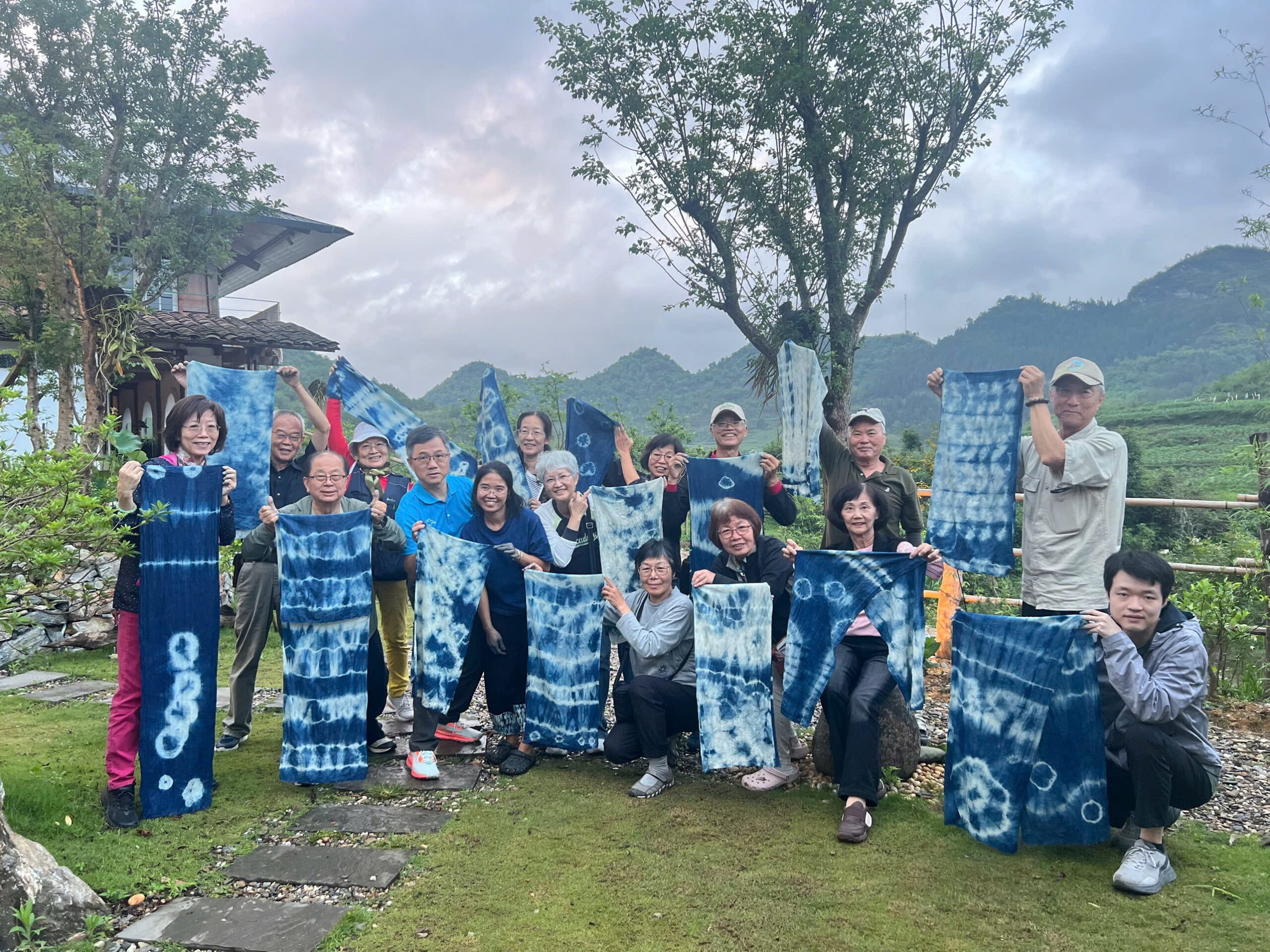
Indigo is fermented in large vats, and dyeing is not one dip but many, the cloth is submerged, lifted, allowed to oxidise in the air, dried, and submerged again, over and over for weeks. Each cycle deepens the colour. A properly dyed piece is so dark it reads almost black, with a faint copper sheen where it has been rubbed. Dyers’ hands stay blue through the season.
The most striking technique comes before the dye. Molten beeswax is drawn onto the white cloth with a small brass pen, in fine geometric patterns, spirals, crosses, bands. The waxed lines resist the indigo. After dyeing, the cloth is boiled, the wax lifts out, and the pattern appears in white on deep blue.
It is batik, done freehand, from memory, with hot wax and a metal nib. No pencil marks. Then, often, embroidery is added on top.

Where you can see it
The best-known place in Hà Giang is Lùng Tám, in Quản Bạ district, where a women’s weaving cooperative has kept the full process alive and made it into a livelihood. You can watch each stage, the pounding, the loom, the indigo vats, in the same visit, which is rare.
It is worth going in with a clear head about price. A hand-woven, hand-dyed, hand-drawn piece involves dozens of separate steps and months of work spread across a year. When you see the number and then think about the hours, the number stops looking high and starts looking low.
Why this one matters
Roads reached these villages sixty years ago. Cheap machine-made fabric reached them not long after. Nobody up here has to make cloth this way any more, and plenty of families have stopped.
The ones who continue are largely doing it because it is theirs. The patterns carry family and clan meaning, and the skill is handed from mother to daughter with no written instructions anywhere.

If you get the chance to sit with someone while they work, take it. You will not learn to do it. But you will never look at a market stall the same way again.